Showing posts with label jamaica. Show all posts

11/14/14

Legacy of 1804 with Dr. Matthew Smith #Haiti #Jamaica #History


Historian and UWI professor  Matthew J. Smith joins me tonight at 9PM  to discuss his research about Haiti-Jamaica migratory relations before 1915. At the time, Jamaica was the place where Haitian presidents went into exile then and in 1900 Jamaicans were the biggest group of English speakers in Haiti.

He will tell us about his latest book on the topic: Liberty, Fraternity, Exile: Haiti and Jamaica after emancipation.

We'll also discuss broader patterns of inter-Caribbean migration during that time.

You might be surprised with what you find out.

Listen live or archived at http://www.blogtalkradio.com/blackwholeradio/2014/11/15/legacy-of-1804-with-dr-matthew-smith-haiti-jamaica or at 323-927-2913.

Use the hashtag #LOF1804 to react on Twitter!

UPDATE: SHOW AUDIO


Check Out Culture Podcasts at Blog Talk Radio with Black Whole Radio on BlogTalkRadio

Kiskeácity Daily | Instagram | @kiskeacity| Facebook | Tumblr

7/10/14

Legacy of 1804 on Digicel Blocks VoIPs in the Caribbean #Haiti #LOF1804 #netneutrality


Digicel has blocked VoIP access (Viber, Tango etc) in Haiti, Trinidad and Jamaica. Other cell phone carriers such as Lime have done so as well. This has generated a firestorm on Caribbean social media, at least one petition and a reaction by the Trinidadian Telecom regulatory body which reinstated VoIPs in Trinidad while it deliberates the issue.

Join me in my capacity as LOF1804 weekly host and head of  the Americas Desk  at Internet Without Borders this Friday July 11 at 9PM EA as I welcome:


For more background on the issue:

http://buff.ly/1jtAEYn


Listen live at http://tobtr.com/s/6670679 or on the phone at 323-927-2913.

You can listen to past shows at http://www.kiskeacity.com/search/label/LOF1804 or by searching "Legacy of 1804" or subscribing to the Black Whole Radio feed in iTunes.

UPDATE 1:

We have a new show link because of technical difficulties:
I'm broadcasting live on the air! Listen in now at http://tobtr.com/s/6670679. #BlogTalkRadio #lof1804 #digicel #VoIPs


UPDATE 2 (SHOW AUDIO):

UPDATE 3 - HIGHLIGHTS:

Speakers gave us an update of where things stand in their respective jurisdictions. In Trinidad services have been restored while TATT deliberates. In Haiti and Jamaica, applications are still blocked.

Pascal Antoine pointed out that Digicel's competitor NatCom has not blocked VoIPs.

Panelists answered the following questions and more:

Why have Haiti's Conatel and its Jamaican equivalent still not pronounced themselves on the VoIP block?
Why are cell phone providers doing this block now?
Have workaround applications to the block surfaced in the Caribbean?
How long have cell phone providers wanted to block VoIPs? According to Michele Marius this is just the latest development in a long battle between carriers and VoIPs.
Is this a dangerous precedent for net neutrality in the region and globally? What if Digicel decides it wants to block an app by a Haitian congressional candidate it does not like?
What is the state of Caribbean innovation?


New Education Podcasts with Black Whole Radio on BlogTalkRadio


Gerard Best generously curated the following links for us during the show:

REGIONAL
ICT Pulse: Mixed Signals http://www.ict-pulse.com/2014/07/case-mixed-signals-blocking-voip-caribbean/
Bevil Wooding—Defending An Open Caribbean Internet: http://www.siliconcaribe.com/2014/07/07/defending-an-open-caribbean-internet/
Jacqueline Charles—Miami Herald: Cellular providers block ‘free’ call apps in Caribbean angering consumers: http://www.miamiherald.com/2014/07/10/4229297/caribbean-cellular-provides-block.html

HAITI
Digicel Haiti blocks VoIP: http://www.telegeography.com/products/commsupdate/articles/2014/06/25/digicel-haiti-blocks-voip-applications/
Digicel Haiti and Conatel in talks: http://m.lenouvelliste.com/lenouvelliste/article/133181/Il-ny-a-pas-que-de-mauvaises-nouvelles.html#.U70gAKd86KQ.email

JAMAICA
Digicel mulls banning Viber, other 'unlicensed' VoIP services in Jamaica: http://jamaica-gleaner.com/.../business/business2.html
Digicel, LIME follow through on VoIP blockade: http://jamaica-gleaner.com/.../business/business3.html
Digicel and LIME Jamaica block VoIP: http://www.telegeography.com/products/commsupdate/articles/2014/07/03/digicel-and-lime-block-voip-providers/

TRINIDAD AND TOBAGO
Digicel wants Viber, Tango, Nimbuzz providers to pay
http://www.guardian.co.tt/news/2014-07-06/digicel-wants-viber-tango-nimbuzz-providers-pay
The T&T Guardian reported that Digicel agreed to allow its customers to access VoIP applications Viber, Tango and Nimbuzz once again after the Telecommunications Authority of T&T (TATT) started an investigation into complaints made about Digicel’s action. http://www.guardian.co.tt/news/2014-07-09/digicel-returns-voip-services

Kiskeácity Daily | Instagram | @kiskeacity| Facebook | Tumblr

6/20/14

Legacy of 1804 on Maurice Bishop and Grenada Revolution #lof1804 #forwardever


Join me and Michelle Materre, founder of Creatively Speaking Film Series and host of Creativey Speaking on the Air tonight June 20th at 9PM as we welcome Bruce Paddington, maker of the documentary Forward Ever. The film investigates the Grenadian revolution of 1979 which culminated in the killing of Maurice Bishop and several of his colleagues in 1983. (Bruce is with us for the first half hour.)

We are then joined by Trinidadian-American trade unionist Roger Toussaint and cultural activist Martin Felix who came of age in Grenada during the revolution, to explore aspects of this oft neglected chapter of Caribbean history. How was this movement for self-determination launched in the pre-social media era? Why did Reagan take exception to the building of an international airport in Grenada? Did US involvement start at the post-killing invasion or was the Grenadian movement for self-determination infiltrated and destabilized?

Originally aired on Creatively Speaking On the Air June 18, 2014. There will be no live Q and A tonight.

Forward Ever will be screening FREE Friday June 20 at Medgar Evers College in Brooklyn at 6PM and again at 4PM Saturday June 21 at Maisles Theater in Harlem. Purchase tickets for Harlem screening this Saturday here: http://maysles.org/mdc/forward-ever-the-killing-of-a-revolution/.

Listen live or archived at http://www.blogtalkradio.com/blackwholeradio/2014/06/21/legacy-of-1804-with-new-film-on-maurice-bishop-and-grenada-revolution or 323-927-2913.

You can listen to past shows on iTunes by searching keywords 'Legacy of 1804'. Past shows are also available at http://www.kiskeacity.com/search/label/LOF1804. On Twitter: react to or ask questions by using the hashtag #LOF1804

UPDATE: SHOW AUDIO


Check Out Culture Podcasts at Blog Talk Radio with Black Whole Radio on BlogTalkRadio


Kiskeácity Daily | Instagram | @kiskeacity| Facebook | Tumblr

11/8/11

Jamaica For Sale Screening in NYC This Thursday


I saw this film  by Esther Figueroa last year and it is a cautionary tale for Haiti. Please let's prevent this from happening to Jacmel or any other towns being singled out for tourism. Make sure you see the film. 


Enter your Email

9/14/11

kiskeácity daily is out ! Edition of Tuesday, Sep. 13 and Wednesday, Sep.14, 2011 #Haiti #diaspora


VIEW FULL PAPER 


Highlights


  • Lovely Boston Haitian Reporter article on young diaspora Haitians returning to Haiti to live and work, a trend I had noticed a while back.

  • Miss Universe pageant over with Miss Angola the big winner. Panama wins best national costume. (Google, Le Nouvelliste, Blog Carel la))

  • The tragedy of 10 Haitians dead at sea while attempting to reach the Turks and Caicos Islands. (HPN) 

  • Former Jamaican PM P.J. Patterson joins Haiti Investment Council. (Caribbean Journal)

  • Brazil asks UN security council to withdraw 15% of troops. (HPN)

  • And more on PM designate Gary Conille.


VIDEO

Miss Haiti (@anedie01)'s goodbye video on the bus back from the pageant, the only item in today's edition of the paper :


8/26/11

kiskeácity daily is out ! Edition of Friday, Aug. 26, 2011


VIEW FULL PAPER

Highlights

Headlines -

Digicel refusing interconnection with Natcom, in contrast with Voilà. (www.haitilibre.com). (See interview with Voilà CEO Padberg on the topic in Metro Newz of today below.)

More details on the continued conflict between Martelly and Parliament heads on the procedure to choose a Prime Minister. (www.haitilibre.com)


From the blogs -

Haiti - Cyrus Sibert of Réseau Citadelle deplores the fact that Martelly has been put on the defensive by Parliament and offers theories on who is pulling the strings in the background. (Headlines)

Trinidad - Global Voices offers a social media review of the debate around the state of emergency. Gerard Best looks at how the price of rice in Trinidad may lead to increased local production of fibery roots. (Headlines)

Video -
(May not appear on emails. Please view on www.kiskeacity.com or directly in paper.)


Jamaican arts activist Dutty Bookman talks about his new memoir.


Haiti-based Metro Newz for yesterday covers:


  •  the aftermath of Irene: two have now been found dead because of the overflow of a normally dry ravine; 
  • MINUSTAH saying the only report they recognize on the cholera issue is their own;
  • update on camp population: 60% have left;
  • footage of Voilà's CEO talking at a TPTC commission hearing about his company's cooperation with Natcom on interconnection contrary to Digicel. 


Enter your Email

8/16/11

kiskeácity daily is out ! Editions of Saturday, Aug. 13 and Tuesday, Aug. 16, 2011


VIEW ARCHIVED EDITION FOR SATURDAY


Haiti - Head of Oxfam Haiti resigns (two articles, EN). Martelly's Chile visit: housing projects and Haitian community there (FR, EN). Martelly's back to school plans: 146,000 children in age of being schooled for the first time (FR). More on parliamentary crisis.


VIEW FULL PAPER FOR TODAY

From the blogs -  From www.Culture509.com, fiction about a restavèk named Ti Man Maille potentially slated to be filmed in Belgium (post is not clear). Haitian-American artist and educator Ella Turenne makes a plea for more stories of Haitian agency in rebuilding Haiti and less of ... Sean Penn (Huffington Post).

Caribbean - Toronto film about Caribbean diasporas from Suriname, Guyana, Jamaica and the Dominican Republic and the impact of their tourism in their home countries (MNIAlive.com). Upcoming Caribbean crafts convention in the Dominican Republic (MNIAlive.com). Sixth Gwoka (Guadeloupean drum) festival in Paris (Repeating Islands).

Video - Télé Métropole news for August 12: Martelly in Argentina, crime resurgence near displaced camps in Champs de Mars from the perspective of Senator Youri Latortue, the National Police and of camp dwellers. Jèn Kore Jèn youth summit: youth representative deplores disunity between President and Parliament.


Enter your Email

8/11/11

kiskeácity daily is out ! Edition of Thursday, Aug. 11, 2011


VIEW FULL PAPER


Haiti Politics - BRAZILIAN FORCES MAY PULL OUT OF HAITI. Senator Edwin Zenny's comments on color tensions in Parliament (FR, EN - Sadly HaitiLibre.com's English version is quite poor and makes poor translation choices such as using mestizo instead of mulatto (!) but you can get the gist of what is going on.)   Manigat doubts Martelly's education plan (FR, EN). Catholic church attack in the North condemned (FR, EN).

Caribbean - Interesting remarks on how to fix Jamaica by Jamaican Governor-General in Washington. On the SiliconCaribe site, Jamaican filmmaker David Mullings explains how he crowdfunded his new film on the Jamaican railroad by using IndieGogo.com. (A story which sounds a lot like how veteran Haitian filmmaker Richard Senecal is funding his film Malpasse on Haitian Students in the D.R.) Upcoming Caribbean-American festival in Springfield, MA.

From the blogs - Haitian blogs in Haiti and the diaspora are abuzz with culture talk (See #Haiti and #Brooklyn tabs). Culture509.com wonders what happens after Haitian talent wins one of the many music contests funded by Digicel or American Airlines over the years and announces a seminar on Haitian folk dance. The Haiti Cultural Exchange website announces a forthcoming Haitian poetry night in Brooklyn on August 20th which will showcase a wide range of Haitian poets from Jacques Roumain to Michèle Marcelin with music by La Troupe Makandal. (I don't intend to miss it and I hope you won't either.) HCX also invites volunteers to paint a mural at PS189, a high school in Brooklyn where they offer arts and culture seminars for children.


Enter your Email

8/10/11

kiskeácity daily is out ! Edition of Wednesday, Aug. 10, 2011


VIEW FULL PAPER

Former presidential candidate Mirlande Manigat breaks her silence and weighs in on Martelly's education plan which she deems unrealistic. She also has some terse advice for the President on how he should handle a parliament he does not control. (See Metro News Aug. 9 video.)

Also: opening of application period for Yele's hotel studies training, IDB's $11 million fund for small and mid-sized business and yesterday's Cardicis3 newsletter about information and communications technologies (ICTs) in the Caribbean contains interesting news about Blackberrys and teachers in Jamaica.


Enter your Email

8/9/11

kiskeácity daily is out ! Edition of Tuesday, Aug. 09, 2011


VIEW FULL PAPER


Haiti Headlines - Voilà receives award for Tcash mobile payment program (FR & EN).  Haitian women rebuilding Haiti by removing rubble by hand (FR &EN). Haitian women receive training in soccer football .


Caribbean - Grenada calling on its diaspora. Racialized party structure in Trinidad. Jamaica getting a sweet deal on sugar.


Video - My own video of Régine Roumain talking about Haiti Cultural Exchange's goal for a Haitian cultural center in NY. Footage of London riots yesterday. Two editions of Haiti-based Metro News covering topics from the next step on the Prime Minister search, Kay Pa'm, Jean-Claude Bajeux, Voilà's Tcash, policing and student protests etc. 


Photos - Under the #Haiti tab, pictures of the Aug. 5th James Germain/Emeline Michel concert at Fokal. 


Enjoy!


Enter your Email

7/27/11

kiskeácity daily is out ! Edition of Tuesday, Jul. 26, 2011


VIEW FULL PAPER

Lots on Creole whether Haitian (Boston Globe), Jamaican (from the blog of Annie Paul) or Swiss-German;  more on Martelly and the CIRH as well as his tourism week tour, his visit to the North where he was attacked and the parliamentary/prime minister crisis including a plea by members of French parliament and Haitian industrialists to reach a consensus; death of a deputy. Nafissatou Diallo's first public appearance caught my eye as well.

The interesting blog posts are under the #Haiti tag. Topics include: Creoles and education in Haiti, Jamaica and Switzerland, a view of P-au-P, library updates by the Bibliothèques sans Frontières blog, upcoming Port-au-Prince arts and entertainment events including a conference on Jean Price-Mars as well as a letter by Haitians in Guadeloupe decrying the Haitian consulate there and OGLHaiti's upcoming radio show on the Haitian environment.

Enter your Email

7/25/11

kiskeácity daily is out ! Edition of Monday, Jul. 25, 2011


VIEW FULL PAPER


Topics include various Caribbean-American festivals and heritage celebrations including Jamaican Independence day (See NY Daily News); C@ribnet, a potential digital integration tool for various Caribbean institutions; women and technology in Africa; arts festivals in Africa; a new USAID study on Haitian prisons and more. 


Enter your Email

5/25/08

Nicholas Laughlin on Caribbean Literature

David Sasaki has a lovely interview with Trinidadian author Nicholas Laughlin. They are both at the Calabash literary festival in Jamaica right now and you can almost taste the sea salt. They are talking about Caribbean literature, imaginary roads, creoleness and it all makes you a bit nostalgic...

I'm embedding the video below but you can also just click here.


Nicholas blogs here and is the editor of the Caribbean Review of Books.

Technorati Tags: , ,

3/6/07

Jamaica Robotics and Youth Experiment

I just viewed this video on Ethan Zuckerman's blog and I thought I'd post it here right away. It is about the amazing work that Jamaican Marvin Hall is doing in his country, teaching robotics to young people who need to channel their creativity toward something constructive.
Take a look.


Read the background in Ethan's post.


Technorati: , ,

2/24/07

Hyphenate This! Councilman Eugene & the Jamaican-Haitian Connection


Yvette (and her mother Una) Clarke saw Mathieu Eugene to victory in the special 40th Council District election in Brooklyn. (The seat was vacated by Yvette Clarke when she was elected to Congress.)

Interesting quote by Una Clarke (who was forced out of city politics by term limits) in
this Flatbush Courier article:
“Caribbean-Americans want to chart our own destiny. I think it is the immigrant dream and the immigrant experience that as soon as communities become mature enough, they take on responsibility for themselves.”

And then by Congresswoman (Yvette) Clarke:
“To the community, I want you to feel empowered today. In just four months, you sent a daughter from Jamaica to Congress and a son from Haiti to the New York City Council. We have come of age not only socially, not only economically, but politically. And, as we take our seats at the table, no one will be left behind.”


Sounds like the Congresswoman is looking ahead to future congressional elections by courting the Haitian-American vote.

Full Flatbush Courier article.

Photo: Caribbean flags for sale at Dance Africa 2006 in Fort Greene, Brooklyn.

Technorati Tags: , , , , ,


Enter your Email


2/5/07

Haitians, Caribbeans Maturing Politically Says NY Times


A great NY Times article came out today about Haitians, various ethnic groups and the upcoming race for NY City Councilman from NY's 40th council district. (The 40th district encompasses sections of several Brooklyn neighborhoods including Flatbush and Crown Heights.)


The most important observation the article makes is that Haitians in Brooklyn are maturing politically by coming together and choosing one candidate so that their vote does not get split as in countless past elections. (Incidentally, I highlighted this very point in my last post):
Dr. Eugene’s candidacy represents a maturation of the often fractious Haitian political landscape in New York. ... Mr. [Henry] Frank said that typically, several Haitian candidates run for an office and as a result, not one is able to get enough votes to win. “Here in New York, there was a lot of fighting among candidates in our community,” he said. “That’s the way of saying, too many chiefs and not enough Indians here.”

So important was this seat to Haitian political and civic leaders that they had meetings to narrow the field of Haitian-American candidates. The group selected Ferdinand Zizi, a health care administrator, but he withdrew from the race while his petitions were being challenged, leaving Dr. Eugene as the sole Haitian running. Since then, his candidacy has received attention from media outlets in Haiti, which are following the race closely.


And that observation is extended to the district's Caribbean community generally:

“This race is significant because you have a lot of people from various Caribbean ancestries trying to get a seat or hold a seat at the political table,” said Michael Gaspard, a political consultant who has studied the race to succeed Ms. Clarke. “And it’s a sign of the Caribbean community coming of age in a significant political way.”


Jamaican incumbent Yvette Clarke and her mother Una are apparently looking to pass the seat on to Dr. Eugene whom they endorsed in order to repay the Haitian community for their votes over the years:

Ms. Clarke’s mother, Una, made history by becoming the first Jamaican-born member of the Council in 1991. And Yvette Clarke succeeded her mother in the Council before going to Congress this year.

Now, both mother and daughter, who are something of a political force in Brooklyn, have decided that it was time to repay the substantial Haitian support they have received over the years.


But it is hard to predict the election's outcome:
“It’s unpredictable because it’s in the dead of winter and a candidate could win with 15 percent of the vote,” said Mr. Gaspard, the political consultant. “Turnout will be extremely low, and any of them could squeeze this out. And that’s what makes it intriguing.”


To be continued.

Photo by bondidwhat

Technorati Tags: , , ,

1/8/07

Hyphenate This! (Not Black Like Me, Says Crouch)


From the Jan.1 Issue of Newsweek, from "Is America Ready?", an article on Barak Obama, a quote which is I think relevant to the Caribbean-American experience:

The critic Stanley Crouch argued in a recent column titled "Not Black Like Me" that Obama -- raised in Hawaii as the son of a black man from Kenya and a white woman from Kansas (both academics, both now dead)-- is more representative of the uplifting immigrant experience that the grim African-American one. He will have come into the white house through a side door--which might, at this point, be the only one that's open."


The article says Barack is similar to (Jamaican-American) Colin Powell in that he too was seen more as an immigrant than as a "descendant" (i.e. an African-American with roots in the American South). Thoughts anyone?

Barack Obama Photo (Top) by kalexnova. Pictured right, Stanley Crouch.

Technorati Tags: , , ,

11/9/06

Bob Marley Survey + Wrong Song

  • Caribbean blogger Geoffrey Philps had the marvelous idea of conducting a survey about Bob Marley and rastafari on his blog. Here are the results. Maybe I'll comment on them when I have more time. For now digest on your own. Too bad he did not include any questions on Bob and rastafari's views on the family and gender relations. That would have piqued my interest.
  • I was browsing through some new guadeloupean blogs the other day and one, Bouillante Actualites, posted this YouTube video promoting Guadeloupe. I found slightly bizarre though that the lovely song chosen for the clip is ... Haitian?! (Michael Benjamin's Ou Pati Kite Mwen on the first Haiti Twoubadou album.) In this age of globalization and creolization, I don't really care about those distinctions, but the least the maker of the clip could have done is remove the part of the song where Michael screams "Haiti Twoubadou!". I mean the point of the thing is to promote Guadeloupe ... Is that common sense or did I wake up on the wrong foot?


- - - -


Enter your Email


Have a comment? Please post it by clicking Comments below.
To send this post to a friend, click on the envelope icon below.

11/14/05

Home Can Be Draining But Are We Draining Home?


What the Heck Are You Going to Haiti For?
Since last week's interview with Mill Polyne, I've come across other links about second generation haitian-americans who take an interest in Haiti professionally.

The first is an article about Pascal Antoine, founder of www.haitixchange.com. Much like Mill, he tells of discovering Haiti as an adult (in his case, via a trip) and against his relatives' advice.

Then, still on HaitiXchange, rapper Mecca a.k.a. Grimo, born in Brooklyn and raised in Miami, talks about rapping in Creole.


Brain Drain through Caribbean Lens
A couple of weeks ago, I blogged about the New York Times article on the World Bank's stats that 80% of Haitian and Jamaican college graduates and over 85% of Surinamese and Guyanese college graduates live abroad. (Compare with 3 to 5% for India and China.) According to the article, the World Bank's report seems to make a causal link between the brain drain and some developing countries' developing status.

Today's Jamaica Gleaner has a rather interesting editorial about this issue which unveils a caribbean perspective --one of many, I'm sure--on the World Bank's stats. The article suggests that Jamaica's saturated job market cannot absorb all the "brains" produced anyway and that high volumes of remittances sent home by Jamaican migrants (about 1.4 billion for Jamaica and 1 billion for Haiti) may make the "drain" worthwhile. It also talks about Jamaica being in the "business of education for export" and mentions that it might not be a bad idea for migrant "brains" to compensate Jamaica for the education somehow. Hmmm...

11/3/05

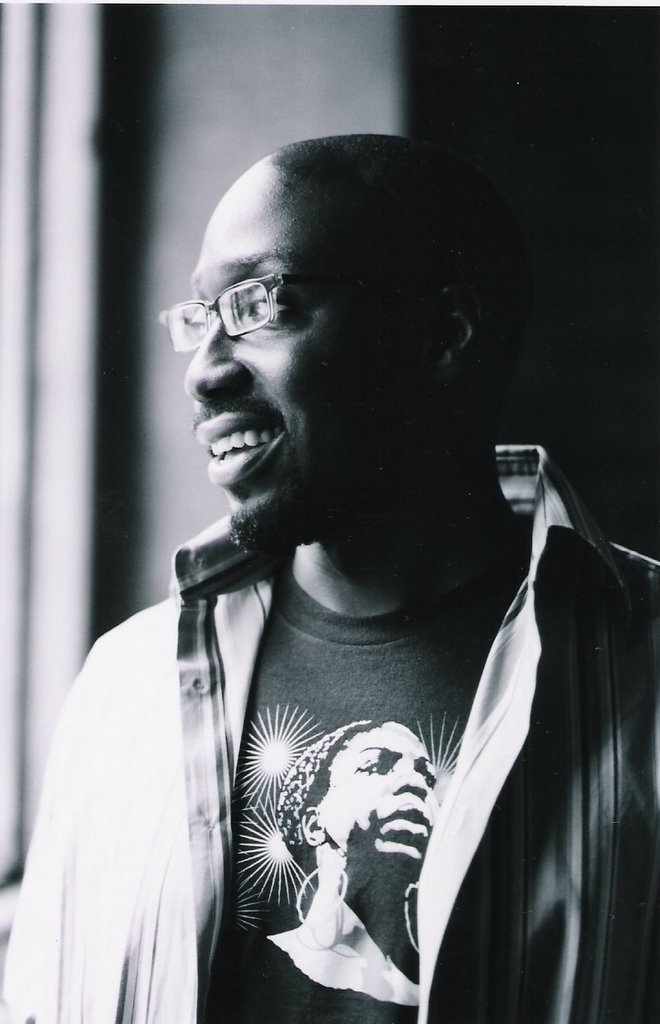
Second Generation Nation: Mill Polyné PhD on Growing up Haitian in America

Dr. Millery Polyné, 31, is Assistant Professor of History at the College of Staten Island, City University of New York. He holds a PhD from the University of Michigan and is writing a book on the history of relations between Haitian and African-American leadership.


Born and Raised in Boston

Alice says -- So you are of Haitian parents born and raised in the United States. You are what many call a second generation Haitian-American. You're obviously bright and you could have become a doctor or lawyer or a rapper or whatever else. Why History and Haitian History specifically?

Millery says --Why Haitian history? Well, I grew up basically during a time when to be Haitian in Boston was to be ostracized to the margins.

Millery says -- I went to Morehouse College and I had a Liberian professor who spoke to me about the Haitian Revolution which blew my mind. It wasn't until my junior year of college that I actually took some real pride in my Haitianness. It's sort of a typical story of a child of immigrants discovering their identity late in the game.

Alice says -- What do you mean by "to be Haitian in Boston was to be ostracized to the margins"?

Millery says -- Boston has a significant Haitian population. In the 1970s and 80s, many Haitians were seen as refugees, low wage earners, vodou practicing people. The black and white American communities, as is typical in most places, tend to marginalize new ethnic groups on the block. Kids are picked on. Mothers and fathers are insulted. Employers relegate them to certain jobs.

Alice says -- I hear that.

Millery says -- Similar to many Haitian mothers, my mother entered into the economic niche of a nurse’s aid in a convalescent home -- when she had other aspirations.

Alice says -- Right. So how did you relate to Haiti before that magic junior year in college?

Millery says -- Well, it's a mixed bag. I loved to hear my family or other Haitians discuss politics. And I was always interested in the current political situation. But, it was clear to me from an early age that non-Haitians treated us differently. I despised being the Other.

Alice says – Did you feel more the Other than the average African-American? Or the average non-Haitian West Indian?

Millery says -- Possibly. I was the Other in terms of being darker skinned; the Other because of not speaking Kreyol well; the Other because of different traditions in the household.

Alice says – Just to play devil’s advocate, each of those things may or may not have to do with being Haitian... no? I mean, one could be Bajan or Jamaican or Trini and similarly complexioned to you and other immigrant groups might have had different traditions in the home too, no?

Millery says -- Well, because of the popularity of reggae to be Jamaican was, in my opinion, cool. Most other Caribbean peoples were typically thrown into the British Caribbean crowd. People from the British/American Caribbean had an easier time transitioning because of language and in terms of youth culture it was easier to digest without a longer legacy and memory of "voodoo" and all the ignorance.

Alice says – Right.

Teen-Aged and Haitian in the 80s and 90s
Alice says -- Wyclef Jean does a very good job I think of bringing home what it was like to be Haitian and a teen in those years (and even today I’m sure).

Millery says -- I wish Wyclef was popular in the 1980s. For some reason you need these popular figures to validate your existence in some ways.

Alice says -- In his song Lavi New York (Life in New York) he talks in Creole about being attacked and beaten up in public school. He says "Male lekol/ Ameriken te atakem, panikem, maltretem/ Fe saw vle, ou pakab dechoukem/...Respekte Ayisyen natif natal" ("I went to school/ Only to be beaten up/ However much you tried you couldn't uproot us/... Better learn to respect us Haitians.") I get goose bumps when I hear that song. And you get a sense that what he is saying is : "How ya like me now?"

Millery says -- YES! And I think a part of that attitude informed my path to academia and educational achievement. And people all over the world are becoming more and more interested in Kreyol and Caribbean identity. I presume Wyclef and I are around the same age. And it is important for the Wyclefs and Danticats to keep telling our stories.

On the Path to History
Alice says -- So walk us through the process of you going from this state of not liking that Otherness that others projected on you presumably because of Haitianity to running into the Liberian professor to deciding : “I'm going to become a Historian of Haiti.”

Millery says -- Well, the process, in many ways, is quite simple. It's a mixture of being confused about what role identity should play in one's life--African Americanness/Haitianness. I went from a confused state of not letting ethnic identity define me to a hip hop culture where Public Enemy, black consciousness and African medallions became quite influential in my life.

Alice says – Right.

Millery says -- From there Boyz N the Hood came out and at the end Trey went to Morehouse and one of my high school mentors was a graduate of the college.

Alice says – LOL.

Millery says -- Professor Augustine Konneh was the influential Liberian teacher in my life and he connected many of the African diasporic dots that became critical to my intellectual and personal development.

Alice says -- Having grown up in Haiti where most of my profs were Haitian, it's hard to fathom a non-Haitian offering Haitian history to you. What did you think about that? Was it strange to you or did you not even think about it?

Millery says -- I didn't even think about it. Most of my education, outside of my parents, was fed to me by non-Haitians.

Alice says -- What were you getting by way of history from your parents?

Millery says -- My parents didn't talk much about Haitian history. I was brought up to be an American. My parents never said I was Haitian. They always made it quite clear that I was born in the US and that I was American.

Alice says –- Your parents’ way seems to be one side of the coin. It is a different take from that of other Haitian parents I know who raised kids here but tried to counter their identification to African-American youth culture by imposing a haitianness that the kids just couldn't handle because they wanted to fit in at school.

Millery says -- Yes.
.
Alice says -- But by contrast your parents seemed to have wanted a blank slate for you.

Millery says -- Yes, in some ways. They sent me to French school early on because some friends of theirs recommended it. But that didn't last long. My parents never had a desire to send us back to Haiti because they felt that all our opportunities for success were here in the U.S.

Alice says -- So you left the French school? I know a Haitian family who sent their kids to a French school in Boston too. It’s gotta be the same one.

Millery says -- Yeah! But I still remember the French national anthem. Colonization of the mind in the U.S.

Alice says – La Marseillaise? LOL. That is hilarious. Now, I totally get that Konneh could have opened up a whole world for you in terms of Haitian History, but why make it your profession?

Millery says -- Well, the funny thing is that when I left high school I realized how many of my friends were Haitian but never admitted it. As a college student I witnessed my little cousins not knowing a single word in Kreyol. I fell in love with the power of education and history on a person’s life. It sounds hokey, but that was my driving force.

Millery says -- I became a history major and when I graduated I knew I didn't want to become a high school teacher right away so I decided to apply to grad school since all my other nerdy history major friends were doing the same. It seemed like becoming a professor on the college level was the kind of life I wanted to have. So, in many ways it was quite practical.


Alice says – Right.
Undercover

Alice says -- I'm still intrigued by the concept of you finding out that some of your high school friends had been Haitian and not admitted it. Were they not admitting it to you even?

Millery says -- Yes. It was weird. I look back on it now and many of them had Haitian last names. And maybe we never admitted it to each other.

Alice says –- LOL. That was going to be my next question. Couldn’t you tell they were Haitian from their names? Was haitianness a covert thing in high school?

Millery says-- In many ways I was clueless about what was considered a “Haitian” last name.

Alice says -- Were none of these kids getting together and speaking some Creole and joking about their parents the way I see my American born Haitian-American cousins do…

Millery says -- If you can believe it blackness was covert in the school I went to. No one spoke Kreyol. No vèvès on the school hallways

Alice says –- LOL. No vèvès on most school hallways in Haiti either believe it or not. LOL. In fact no vèvès in any school probably. But I know what you mean.

Alice says -- So your school was majority white?

Millery says – Yes, but you bring up a good question about performing identity. In some cases you get people doing that to distinguish themselves and other times people are reluctant and try to blend into the "white universal."

Alice says -- Do you think a similarly situated Haitian-American in a Boston school today that was like yours is having the same experience you had?

Millery says -- I know they are. I started a project about Haitians writing letters to Haiti and I received a number of letters from high school students who revealed some of that angst.

Alice says -- In the song Bay Micro'm Volume on Welcome to Haiti, Wyclef says "now we're on the map." (By we he means Haitians.) Is he a little too optimistic? Is the message in the music not trickling down just yet or is it that the culture among the kids has not quite caught up to where he's “at” in his own personal journey?

Millery says -- Well, I can take that several ways. There's a pop culture map where Edwidge and Garcelle Beauvais and Wyclef are spreading the word about who we are as a people. At the same time the message is trickling down but similar to Reaganomics, it's a slow trickle.

Alice says -- LOL

Millery says -- The overwhelming images we have are on television and the news and inform people's ingrained misconceptions.

Alice says – Right.

Millery says -- And I'm an academic and I know that few students will read my book or my articles. But I am dedicating it to Afri-Haitian Americans who ever had to struggle with who they are.

Alice says -- Why will only a few students read your books?

Millery says -- Well, unfortunately, the venues for academics early in their career to publish their work is limited to journals and presses that do not market to young people or their teachers.

Alice says -- What's an Afri-Haitian-American?

Millery says -- Afri-Haitian American is a moniker for people who are native Haitians or Americans born of Haitian parents who also can solidly identify as African American and with black issues in the U.S.

Alice says – Right. Do academics have the time or means to think of spreading their work beyond academia to others who also need it? I mean here you are on your way to tenure (you've already taught for three years) and you need to publish within those presses that you mentioned. Does that leave you time to even think of spreading some of your knowledge to some of these high school students who might be going around ignoring or even hiding their Haitianness?

Millery says -- I believe it's virtually nonexistent. We may give a talk here or there in a high school. I gave a talk at a Haitian unity dinner at St. John's University last year. And I hopefully will give a talk at a high school in Boston and elsewhere in the future.

Millery says -- In this age of publish or perish, academics teach their classes and go home and write. One could do outreach but that never happened when I was growing up. It is essential for that bridge between the university and high school to be built. Haitian professors need to know the teachers and principals in their communities. But admittedly it's tough.

On Black Public Intellectuals
Alice says -- What do you make of the many black public intellectuals who manage to build that bridge but mostly through the media? Cornel West who did a rap CD and appeared on the Matrix, Michael Eric Dyson etc. Even Manning Marable has a website and an agent.

Millery says -- Quite honestly, I was hatin' on public intellectuals for a while because I felt like the level of analysis was being watered down. But now I see their purpose and I understand that they come from a legacy of intellectuals who used the public forum to communicate their ideas to everyone.

Millery says -- What are your thoughts, Alice?

Alice says -- If I have any anxieties about academia it's precisely the idea of working so hard to be heard by so few who themselves are often so privileged. So I don't really mind the public intellectuals.

Millery says -- It's really the complexity of life and of individuals who desire the best for themselves and their people at the same time.

Alice says -- I see them as professionals like any professionals who want to do a good job while making a living…

Millery says –- Right. But many of our organizations/black colleges don't have the funds to pay for our own intellectuals.

Alice says –- True.

Millery says -– These academics are making six figures and it’s nearly impossible to hear their lectures because of the expensive honoraria or their busy schedules. I hope I never make that mistake.

Teaching Caribbean Immigrants at CUNY
Alice says – So did you choose to be at CUNY?

Millery says -- I did.

Alice says -- Did you even consider an Ivy or other private institutions?

Millery says -- Right now in my life I wanted to be at a public university, somewhere where students had a similar experience to mine. Although I went to a private college most students at CUNY are from working class families.

Alice says -– Right. So do you teach Haiti in your classes?

Millery says -– Definitely. I teach the Haitian revolution specifically and I also talk about race and color in Haiti in my History of the Caribbean course.

Alice says -- How many classes do you teach?

Millery says -- I basically teach History of the Caribbean, Modern Latin America and a course called Americas Encounter Europe. Three courses. I plan to offer a course on "the dictator" in the developing world.

Alice says -- What do you like most about being a history prof?

Millery says -- What I enjoy most is making history relevant to student's current dilemmas. When I can get a student to make connections with their current reality I'm a happy brotha.

Alice says -- Does that happen often?

Millery says -- Often, in the sense that every semester I have students who tell me they appreciate my class and what they learned. Evaluations are a good indicator. But I’m happy when a colleague will tell me that a student enjoyed my class.

Alice says -- What do you like least about being a history prof?

Millery says -- What I dislike is obviously the grading but that has nothing to do with history. I guess what I dislike and love the most is that there are no definite answers to life's most pressing questions.
(Photo Courtesy Brian A. Gaffney.)