9/26/05

University of West Indies Deejay Prof. on Stereotypes of Haiti, the "1946 Revolution" and Haitian Music


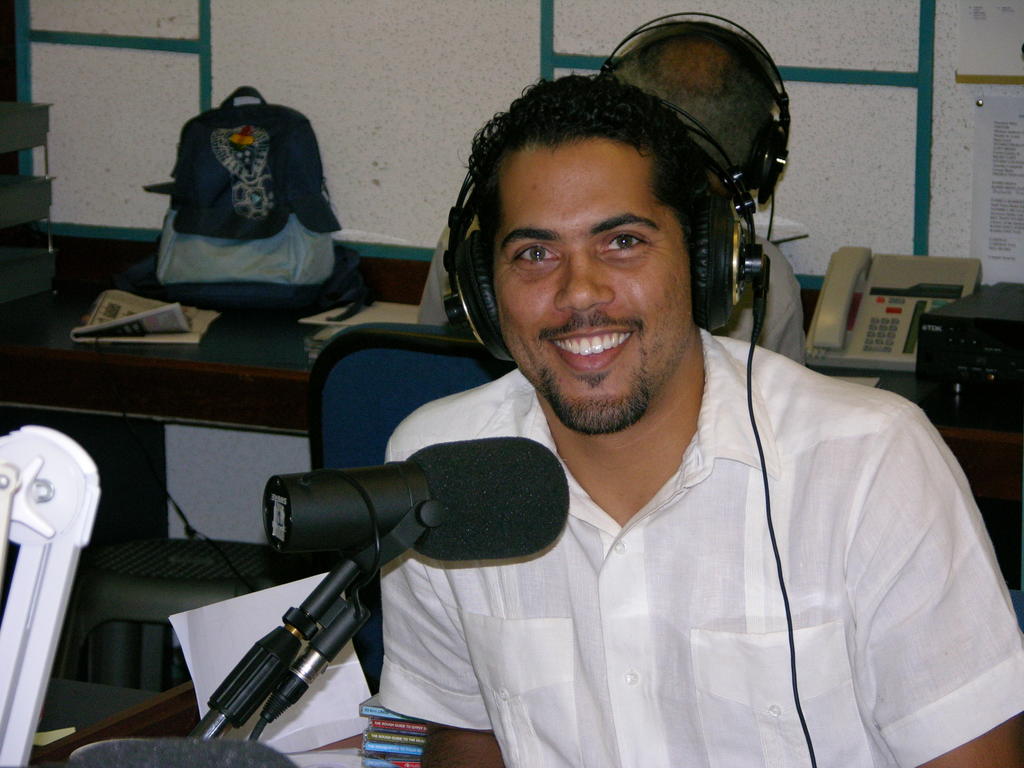
Matt Smith hosting "Okombosi," a world music show.


At the tender age of 31, Dr. Matthew Smith, who holds a PhD in History from the University of Florida, is a leading scholar of Haitian history in Jamaica where he is often asked to offer his expertise on Haiti beyond the University of West Indies (UWI)campus where he teaches. In fact, during the brouhaha that shook Jamaica when the country housed exiled Haitian President Jean-Bertrand Aristide last year, local media repeatedly asked Dr. Smith to dig up Jamaica's long history of housing exiled Haitian Presidents. If you're not envious yet, he also speaks fluent French and Haitian Creole, is a Bob Marley expert and deejays a world music show in his spare time...
Teaching Haitian History to Jamaicans
Alice says -- So you are Jamaican born and raised and you currently teach at University of West Indies, Mona in Kingston. How and why did you become a scholar of Haiti?
Matt says -- My interest in Haiti like many before me and hopefully after me, began with my reading of CLR James' The Black Jacobins. The book transformed my life. Here I was a young high school student in Jamaica, close to Haiti, and knowing so little of this history. My fascination with Haiti developed instantly. Then with Dr. David Geggus as my supervisor at the doctoral level, it gave me the opportunity to fulfill my long dream of delving deeply into haitian history. Since then I' ve done quite a bit of work on various aspects of contemporary Haitian history, particularly political history, and immigration history and the fascination only grows more and more...
Alice says -- How many other Jamaican scholars of Haiti do you know of who like you teach Haitian history in Jamaica?
Matt says -- None.
Alice says -- How does that make you feel?

Matt says --
Well it does make me feel like I do have a strong mandate which I do take seriously, to try and encourage Jamaican students to develop a strong sense of the Caribbean and Haiti particularly as part of their own history. To be fair, there have been senior professors who have done a magnificent job in Haitian studies from right here in Jamaica. Professor Carl Campbell, though not a scholar of Haiti, did encourage an upper division History course on Haiti which has been going on for many many years now, and of course Michael Dash has made some incredible contributions to Haitian studies from right here in Jamaica where he worked for several years. Marie-Jose Nzengou-Tayo, who is Haitian does teach a course in Haitian literature. So there have been pioneers before me. However, this has not really translated into a new generation as strongly as one would have hoped. There is still a strong resentment toward Haiti that is muddled with general confusion. This confusion and misinterpretation is surprisingly well ingrained among students here. I say suprising given the striking similarities between Haiti and Jamaica and the closeness of the countries, etc.
Alice says -- How do you manage to teach your class?
Matt says -- I begin all my classes on Haiti here by spending time on the myths. Surveying the students and asking them what they think of Haiti. What is it that impresses them and what is it that they don't like or understand. Invariably I get several of the much-repeated stereotypes but what is most apparent is just a deep ignorance. So my job is to get beyond all of that with them. Remove their biases and begin to make them see Haiti differently before we can proceed to examine the history.


Debunking Stereotypes on the UWI Campus

Alice says -- S
o what are some of the stereotypes of Haiti that you discuss with your students on the first day of class?
Matt says -- We look first at Haitian culture. Try to understand its various dimensions. This is fairly easy I find for Jamaican students as there are some notable similarities. The mixture of peoples, the history of migration, and the social structures. I also emphasise the connections between Haiti and Jamaica which helps to get students a little more comfortable to the topic. For instance, there were over a dozen Haitian presidents who sought refuge in Jamaica at some point or another. And of course we have had our own recent experience with Haitians in Jamaica which is a good starting point to explain to students the links between the two. From there I move into their own preconceived notions of Haiti. I must say that while students here do have a certain stereotype of vodou it isn't a primary one on their list which I suspect is somewhat different from the US case. More important to them is the view of Haiti being doomed to cyclical patterns of political instability. I try to let them know that it isn't as if the country was born two hundred and one years ago and been entirely suffering ever since. That even if one wants to hold to this view one would first have to examine the various periods of Haitian history to find out what it is that has accounted for this. So that gets them interested. I also show clips of documentary footage on Haiti that shows scenes and people that look like Jamaica and look like them. Music videos are always helpful here and students seem to like the images and the humour and begin to see Haiti differently before we get into the history. So these things help.

Alice says --
What music videos do you show?

Matt says --
Some of the rasin music videos paint a different view of vodou than what they expect. Then some of the compas and hip hop videos with the bling bling also resonates with them . . . I once showed a clip of a T-vice video and a student remarked " I didnt know they had white people in Haiti!" . . . I also screen a Haitian film at the end of the semester which I usually open to the general public. We've screened The Agronomist and "Haitian Corner" in the past. I usually change it around to keep it interesting. "The Agronomist" was well received here.

Alice says -- Why is that do you think?
Matt says -- I think "The Agronomist" resonated with Jamaicans because they saw in Jean Dominique someone who was fighting against formidable odds. But also they see this happening in a Caribbean setting. So although the dynamics are so different the setting isn't that far removed. I mean here in Jamaica we have problems too and though they are quite different there is a frequent remark radio talk show hosts and many people love to say "we're becoming just like Haiti." One politican in explaining the failures of the 1970s famously commented "we were looking for Utopia and instead we found Haiti." So even though this is a negative stereotype and highly prejudiced it does demonstrate that Haiti does figure into conceptions of politics and political failures right here in Jamaica. Also, the Feb 2004 coup and the exile of Aristide here gave the film greater relevance and currency to Jamaicans.


The "Revolution" of 1946: All Eyes on Haiti in a Different Era

"During those years Haiti was the fulcrum of activity in the Caribbean. Remember, this is before the Cuban Revolution and decolonization in the rest of the Caribbean, and even before the Civil Rights movement took off in the US."

Alice says -- You wrote your doctoral thesis on post-occupation, pre-Papa Doc Haiti, right?

Matt says--
My doctoral thesis was entitled, "Shades of Red in A Black Republic: Radicalism, Black Consciousness and Social Conflict in Postoccupation Haiti, 1934-1957." It examined the history of what is perhaps the most overlooked period in twentieth century Haiti, the period following the US occupation. My attraction to this period came from a reading of the available sources in Haiti and elsewhere and being disappointed with how it was handled. There was such hope in Haiti during those years and much of the ideas and tensions discussed were decades ahead of their time. During those years Haiti was the fulcrum of activity in the Caribbean. Remember, this is before the Cuban Revolution and decolonization in the rest of the Caribbean, and even before the Civil Rights movement took off in the US. During those years the attention of the Black world was on Haiti and it made for an incredibly dramatic period.
Matt says -- Added to all of this, was the rise of some of the most important leaders not only in Haiti but I would venture to say in the entire Caribbean that have been left as mere footnotes in the annals of history. Jacques Roumain (though better known than most), Daniel Fignolé, Jacques-Stephen Alexis, René Depestre, Estimé and scores of others (including, for better or worse, Duvalier himself). All of this occured in these formative years that would shape a lot in Haiti. In fact, the entire history of the country up until that point was called into question during the post-occupation years. The extent to which the actors of this era failed is left up to historians and subsequent generations to judge. However, there was a commitment to the country among some, and a powerful sense of nationalism that was alluring to me once I began to get into the archival materials. So this was what I did. I used radicalism as a prism to understanding the entire period as I viewed it as such.

Alice says --
Interesting. I did get a chance to hear your talk on Daniel Fignole, no doubt a highly under-researched figure. Michel Rolph Trouillot does seem to delve into that post-occupation period to explain Duvalier in his great book Haiti: State against Nation and he talks about Fignole in relation to Duvalier a little bit ...

Matt says --
Yes he does. Trouillot, David Nicholls and Michel Hector have shed much light on this period and emphasised its importance to the Duvalier period. However, the true history of the period is not told. We are left with various images, myths even of some of the people of the period and the reasons why certain actions were taken. For instance, the very election of Estimé in 1946 is not fully examined nor the reasons for Fignolé's virulent opposition. What I tried to do was to strip away the stereotypes and try and present as fair an interpretation of the events during those years as I could. In the end, I learnt things about many of these figures, and many others besides those in the limelight, that both impressed and shocked me. But all of it demonstrated just how complicated the period was and deepened my understanding of Haitian political development.

Alice says --
Which of your findings shocked you?

Matt says --
Perhaps it was discovering the backdoor dealings and political malversations that took place during the era. The ideas of 1946 were strong ideas. They were very real ideas and still relevant: to end class and colour prejudice in Haiti. A lot of people went through tremendous sacrifices for this. Only to have these ideals dashed once Haitian realpolitik set in. Someone like Fignolé, a very controversial figure no doubt. But it is hard to disregard Fignolé's tireless fighting with MOP and his many attempts toward improving basic standards for Haitian workers. True he was sometimes drunk on his own popularity, but the very idea of a labour organization that fought to remain independent was a first in Haiti. One of the projects I am currently working on is a proper study of Fignolé and MOP.

Alice says --
Trouillot offers several explanations for the 1946 Revolution including certain staffing policies during the occupation as well as the rise by then of black urban educated elites who needed some representation. How do you explain it?

Matt says --
The 1946 "revolution" was the result of several factors. It is difficult to state one main reason. It was a mixture of both local and international issues. Class and colour issues were very much at the centre of it. But don't forget, it was sons of the bourgeoisie who initiated it. Depestre, Bloncourt, et al were among a fairly privileged sector in Haiti. What they did was motivated by a strong leftist-oriented view. They were very astute and looking around the world found much promise in ideas of socialism and communism, broadly defined. But I don't think even they could have predicted in January 1946 the direction that the country would take. They didn't realize that they were taking the safety valve off of a situation threatening to explode for some time. Now, once this occured the deep-standing tensions among classes and colours in Haiti surfaced. But this was also a result of a general resentment for Lescot who had, through a combination of naivety and complacency, let things swell up in ways that he couldn't even appreciate. Once this happened it meant that all hell would break lose which is exactly what happened.
Matt says -- But it was not the type of conflict one sees now in Haiti. What was different was that there were parties that emerged for the first time, along with newspapers for the first time, that had very determined and ideologically driven arguments that took a long view of Haiti. In that view, it was not only Lescot and his government that was held culpable but generations before him as well as even the United States and their current role in Haiti.
Matt says -- Yes, the US occupation and its staffing policies were blamed but this is an explanation that has evolved long after 1946. What was more important to Haitian radicals of the period was the recent failures of US-Haitian relations: SHADA, poor economic policies, etc. It was a shame what Haiti had to endure during the late Lescot years and this situation not only weakened Haiti's hold on the state, but also reflected a longer pattern of US-Haitian relations that continue to our own time. So, there are several interlocking reasons for what happened in 1946 and the complexity and fast pace of what happened that year demands that we see it as such and not give into the temptation of easy answers.
Matt Smith with David Hinds of Steel Pulse
The Deejay Professor
Alice says -- In addition to teaching, you also host a radio program in Jamaica that focuses on music from the world. I understand it's the only show that plays Haitian music in Jamaica. Tell us more about that.
Matt says -- I make it a point of duty to include a Haitian song in almost every setlist I prepare and feature Haitian music and artists as much as I can including tribute shows to some of the greats like Ti-Manno, Nemours Jean-Baptiste, Boukman Eksperyans etc. We last had a tribute show to Issa El Saieh. Through the radio show I've managed to interview some of the musicians I've always admired like Jimmy Cliff and David Hinds from Steel Pulse.

Alice says --
Do you find it easy juggling the radio show with being a history professor? How do students react to your disc jockey persona?
Matt says -- Well it is difficult at times to juggle the two but I do feel they complement one another. Both involve reaching out to an audience and both, I feel, do make an impact. I am somewhat romantic on the notion of change and its possibilities. Even though I do not see myself as having power to change things, I do see myself as an educator and I treat both jobs the same way. So with the program, I try to use the music, which is the most powerful medium in this world, to teach my audience about other cultures and other countries. It is very important and essential I find for Jamaica. Jamaican music and culture is known the world over. That is clear and undisputable. But Jamaicans do need to understand the world around them and if I can be a part of a process that exposes them to that change, it is worthwhile to me. On the lighter side, it does also allow me to explore my passion for music and particularly Haitian music which I must confess I am totally obsessed with. So that excitement comes through I hope. As for my students, those who do know label me "the DJ Lecturer." Otherwise, like Bruce Wayne, I keep my alternate identity a secret.
Alice says -- Don't ask dont tell...
Matt says -- Exactly. By the way, i'm listening to Tabou Combo, "Bebe Paramount" right now.
Alice says --
Sadly, I don't know the song...
Matt says -- Shame on you!!!!! One of the best tracks of the mini-djazz era and a classic in tabou's repertoire.
Alice says --
I probably know it but not by name. I know "Nouyoksiti", "Mabouya" etc though.


Matt says --
The one about the groupie at the Paramount Theatre that waited backstage to see them... Amazing solo from Dadou Pasquet. I'm sure you know it. They re-released it on the "Rasanble" album as "Banboch Paramount" with an updated compas beat and it also features on their live album....


"As for kreyol, well I had to learn it to do my work on Haiti and the music is also a great teacher of the language. Besides, can you think of a better language???"
Alice says --
How do you explain your obsession with Haitian music and with Haiti in general? I mean you even speak creole and french, how many other Jamaicans who are not of Haitian descent speak creole?
Matt says -- My fascination with Haitian music dates to my first trip to Haiti when I saw how Haitians responded to the music there and the power of it. I went to two concerts that first trip, Sweet Micky and Kanpeche and both had different constituencies yet such a deep impact on the audience. It gripped me immediately. Since then, I have been on a long quest for more Haitian music. I simply adore it and wish it could be more exposed to the rest of the world. I do my part here in Kingston with my show "Okombosi." I even have a jingle in Kreyol that I play. Some of my favourite Haitian groups/performers include: Ti-Manno, Tabou Combo, Shleu-Shleu, Boukman, Emilene Michel, Gypsies, Scorpio, DP Express (with and after Ti-Manno), Septen, Tropicana, Micky, Wyclef, Beethova Obas, and many many more. I also love that new Top Adleman album which I give a lot of airplay. What gets me about Haitian music is the way it is composed and the layers of meaning in so many of the songs. Although there is some fluff in there good songs and good performers I treat as history books as they teach me so much about the culture and the language etc.
Alice says -- Do you play any of the new generation?
Matt says -- We play Konpa Kreyol and of course Carimi gets a lot of airplay. So do the latest carnival tracks I can get my hands on though sometimes that is harder to find here as they aren't usually commercially released. I usually hit the records stores such as Boite a Musique and anywhere in Port-au-Prince I can whenever I am there and bring back as much music as possible to air. Oh yeah, how can I forget, the great master Coupe Cloue, the King. As Jamaicans say, "love him cyaan done..."


Alice says --
LOL


Matt says --
As for kreyol, well I had to learn it to do my work on Haiti and the music is also a great teacher of the language. Besides, can you think of a better language???


Alice says --
I had a similar obsession with martiniquan and guadeloupean creoles which I learned by listening to Zouk as a teen so I completely understand... How is the music received? Is that crowd that is known for liking soca responding to it the way they respond to soca?


Matt says --
Well Jamaicans feel that they miss the point of the music if they don't understand the lyrics which is why I take the time on the program to explain the song and its importance. Other times, I just select a song that is infectious and anyone can dance to it and use that as the entrée. Something like "Ayiti bang bang" or "Mabouya" anything like that gets them into it. I also play songs about Haiti by other performers too. Once I did a show that featured nothing but songs titled "Haiti." You'd be very surprised to know how many songs are titled Haiti outside of the country...


Alice says --
Well I know David Rudder's "Haiti I'm Sorry"...


Matt says --
Kreyol is a fascinating language. Once I started learning it my motivation carried me through and I didn't want to stop. I still continue to learn.




9/19/05

My Jr. Gong Odyssey (Welcome to Jamrock Release)

  • So at the Labor Day Parade, I found out that Damian"Jr. Gong" Marley's new album, "Welcome to Jamrock" would be released last Monday atop a free performance. Although the youngest veteran did not sing a single note at the Carnival, his obvious charisma, rave reviews of the album, the video and okay the Marley name piqued my interest. Having seen a very junior Jr. Gong in concert with his brothers over 6 years ago, I still thought of him as that skinny kid jumping up and down the stage, hair that could barely lock, mucho bravado but not much else. I remembered sunny tunes with a clean sound (nonodat vintage Bob ting). Since Bob passed away when I was 6, seeing any Marley live was better than seeing no Marley live back in those days.
Halfway Tree

  • Then I went looking for the award winning Halfway Tree album from 2002. Did Jr. really deserve the Grammy he snatched for it or were naysayers right to suggest he only got it because Sr. didn't? To my surprise and sheer delight (who wants to waste $9 on a whim?) Jr. Gong-with-the-beauty-queen-mom-and-the-rock-star-dad actually has a mind, a style and a sound of his own. (Check out the distinctive Yuh! that opens just about every song on Jamrock.) Halfway Tree was quite the earful what with its heavy dose of advocating for "ghetto yutes." Of course many can't stop repeating that Jr. Gong grew up "above the half" which whatever it means, is not the ghetto. But guess what? Jr. candidly named the album Halfway Tree after that part of Kingston which, like him, is at a crossroads between uptown and downtown Kingston. And as determined as Jr. seems to deliver his father's political message, he can also be light and breezy. There are flirtations with salsa in She Needs My Love, Yami Bolo's Stevie Wonder-like vocals all over, there is the ode to the Paradise Child he "even had to introduce to Cindy" --Mom to him, Miss World 1974 to the rest of us,-- there is even the candor about the fickle torment of being Stuck in Between two very different women. (We knew men had trouble with monogamy but how many freely delve into the logistical --occasionally emotional--dilemma bigamy entails? Ah the Marley magic.)
In line for 3 hours
  • Call it curiosity, call it groupie-ism, call it a symptom of the buppy third-life crisis (three years in corporate America can send you running kicking and screaming for kulcha), I made it to the very beginning of the line to see Jr.Gong's free performance Monday the 13th at the Union Square Virgin Megastore, three hours early! At stake was an opportunity to see how Jr. does live and possibly an autographed copy of the album being released at midnight that night. I congratulated myself for beating the crowd, but panic struck when I realized I had neither book nor headphones.
  • Thankfully a quick look around proved comforting. There was plenty to take in what with the colorful one-time coalition that showed up and formed a line that curled up around the block. Collegy hotties as scantily clad as groupies should be, some looking like contenders to a "Honey" role in a Hip Hop video, others more rootsy but all connected by either Jamaica hoodies or red gold and green wristbands; preppily dressed boys who looked like what I imagine to be Hillel, St George or Phillips Exeter grads now enrolled at NYU or Columbia; real rastafarians of all ages; the occasional model-like blonde with the dreadlocked boyfriend; obvious reggae diehards; and of course one or two yutes in mesh marinas and diamond earrings who may have actually lived what Jr. describes in the Jamrock single.
15 minutes of...

  • My friend Jennifer finally joined me at 10:30, happy I'd already endured the brunt of the pilgrimage. Since even my sweetie declined to make the journey with me, I wasn't complaining. We could at least yap away during the half-hour between us and Jr. Gong. By 11:00 we were inside the cafe. By 11:15, a promoter claimed Jr. Gong was in the house. At 11:30, Jennifer, hungry and tired, left. At 11:45, Jr. Gong finally appeared, in fitted jeans and a long-sleeved white t-shirt, his locks disappointingly pulled up under a bulging rasta cap, looking tired, shorter and skinnier than I pictured him. (Anyone feeding the boy?) I learned later that a ceremonious kickoff had taken place the previous friday at Kingston's 56 Hope Road and that Jr. had been promoting in DC that morning so I feel for Jr. That being said, I had just waited three hours and 15 minutes of unknown rhymes backed up by a lone turntable were kind of hard to swallow in the moment. At the end of the performance though, Jamrock blared in the megastore as people lined up for their copy. I've been playing the album non-stop since and that somehow makes me feel better about the three-hour queue. I did skip the second line required to get the autograph. Would you line up around the corner for someone who's 4 years your junior? :-)
The album
  • Jamrock repeats a lot of the narrative themes from Halfway Tree: someone's descent into junkyism in Pimpa's Paradise; Jr. doing the right thing, reprazentin' for the poverty-stricken ghetto yutes whose plight Daddy shared before making it big and berating the fickle politicians who unleash bad cops. But while Daddy sang about all this, Jr. mostly deejays (i.e. raps dancehall style), too happy to steal the moral highground from fellow uptowner Sean Paul who is more of the bling persuasion. There's the familiar boasting about what the youngest veteran says is his not so Junior sexual prowess. What's new is the nod to monogamy in Beautiful, a Prince-flavored collaboration with none other than Bobby Brown. The sounds are fresh and adventurous: an Ethiopian melody in the background to For the Babies; what sounds like some Nigerian rap on the addictive mantra-like Khaki Suit; the unearthing of Bob's early ska in All Night and of Exodus in the thunderous traditional drumming of Move plus much much more...

9/7/05

Labor Day highlights

Devan bann-nan
  • Overall, Haitians should have nothing to complain about as FOUR prominent Haitian bands delivered all the gouyad I needed for the year: Sweet Micky in a flurry of familiar pink flags but surprisingly not in drag, T-Vice, Djakout Mizik in partnership with the Haitian Times and Koudjay a rasin band who delivered great kanaval music and the most original of the 4 floats. (Unfortunately for Koudjay, they were right behind Sweet Micky and although they were no doubt well followed, I would have chosen a different spot.)
  • I personally followed the Sweet Micky float on the street and past the library into the park!!! I got to do in Brooklyn what I haven't really done in Haiti: mret nan bann-nan net ale. Bann-nan te cho!
  • For once, no complaints from my Haitians friends (hyphenated or not) who all seemed way too busy getting their groove on. I lost Jenny my carnival-crazed sibling early in the game but when she finally caught up to me, she'd already spent several hours with Micky and T-Vice and inspired my own venture into the sea of whining bodies following Micky. A little late in the game (it was past 6, the official closing time) but worth every last second.
Junior Gong
  • The youngest Marley showed up in a float prominently featuring his American "Welcome to Jamrock" release date. He apparently delivered 90 minutes of a blazing concert in Jamaica last month. Not quite on the parkway. Although his band was hard at work rousing the crowd, by the time I caught him Mr. Marley seemed more interested in looking as stern and studly as his album cover than in actually singing. It was great to see his manly stature in person but it would've been nice to actually h-e-a-r him. When his float reached the end of the parade, I looked for him again but he'd literally jumped ship with half his entourage leaving his deejay alone to rock the crowd. Poor thing is probably on tour and may have had a plane to catch. Whatever the worth of his performance, "Jamrock"s release date--Sept 13-- is now etched in my brain.
Steel pan shmeel pan
  • My friend Sarah --decked out in an outfit made of Grenadian flags--spent all week at steel pan rehearsals that culminated into the steel pan contest I missed Saturday. Little did I know then that I wouldn't see any on the Parkway. She and I lost each other after I decided to follow Micky but who knows, maybe she got luckier after I left?
  • Trinis did grace us as usual with the most flamboyant costumes. Pictures will trickle in as the week unfolds so come back for snapshots.
T-shirt drama
  • Apparently costumes were to be mandatory this year in order to play mas (i.e. follow bands in the street). After protracted negotiations, t-shirts with your band's colors were declared enough for mas goers, mostly a concession to Haitians and Jamaicans apparently. While the t-shirts were universal on the actual floats, the rule was not enforced on the ground and many played mas without them. The costumeless may not be as lucky next year as those who negotiated the t-shirt compromise promised to deliver sequins and artifice in 2006. (Thank god I played mas this year!)

9/3/05

Labor Day and Katrina

As late as the rest of the world, I started taking in images and information about Katrina yesterday. I'm still processing the extent of the disaster.

I was looking forward all week to counting down to the Labor Day Parade on Monday and to the imminent arrival of a little one in my family. I was talking to my friend Sarah who studies steel pan culture about attending tonight's steel pan contest in Brooklyn.

Now I wonder, how festive can Labor Day be in light of all the sadness and devastation left behind by Katrina? What would Katrina's victims think of floods of people dancing to jolly calypsos as they are flooded by despair and neglect? Mostly, what world is the little one coming into?

Answers to some of these questions seem obvious but others aren't. As sure as life goes on, the trauma of those grappling with disaster will endure...

8/29/05

Figgy on Uptown Jamaica, a Brown girl's brown boy beef and having folks on both sides of the Revolution

Second installment of last week's msn messenger interview with Figgy.

Alice says:
So what's "After the Revolution"?

Esther says:
after the revolution is a project i've been wanting to do forever - it started out with me wanting to deal with my ambivalent feelings about what happened in jamaica in the 70's with the attempt at social transformation with a sort of "socialist" revolution and the whole romance of revolution and the drama of it all and what was and wasn't accomplished -
i wanted to start out with your typical brown-skinned middle class nuclear family being interviewed and asked "and what are you doing after the revolution" and replying "going to disney land" - yep i have some bitterness - but it's changed over time and i realize that it's really part of my larger obsession - my meaning of life obsession that i guess all my work is ultimately about - how does the individual exist in history - what is agency?
and so after the revolution looks at this question of historical agency through the desire for freedom and attempts at social transformation - the project keeps changing in detail but i'm thinking of looking at emancipation, independence and the 70's moment as the historical moments i look at - with the question of where does the desire for change come from - who are the players - what are the forces for and against - what is possible - and afterwards what happened and how do people feel.

Alice says:
Interesting!

Esther says:
so i'm currently in the research and development stage - trying to write a proposal to find money - and at the same time i've been talking with people and getting people involved etc. it's going to be a lot of work and a lot of fun and a lot of pain!

Alice says:
Wow!

Alice says:
When you talk about the 70s revolution, do you mean that period when Manley flirted with Castro, prior to loosing to Seaga?

Esther says:
yes it is the time of manley but it's more than manley because there were other players - there was trevor monroe and the jamaica workers party - there was the communist party (an earlier entity) there was of course stuff going on in trinidad guyana grenada and other places and it was all taking place within the "cold war" and the manipulations of both the soviet union the us and the european colonial powers despite what the unaligned movement was trying to do.
my family was on both sides of the revolution and i watched the emotional toll it took on people as well as the sort of unnecessary expansiveness of ego that of course has nothing to do with ideology but which actually is what ultimately drives the behaviour of "leaders" -
and then decades later i look at where people are in their lives and go huh? when i was in jamaica i saw an elderly friend who had been really crushed by something that had happened in the 70's - he had been accused of racism and colonialist sympathies and you know being on the wrong side - and his work had been taken from him etc. and he never really got over it - he's now in his 80's and i thought where are the people now who did this to him - who were so young and righteous at the time? did they mean to break a person's spirit and heart did they intend any of this? well some are dead some are rastas some are capitalists some are well placed academics some are indifferent etc.etc.

Alice says:
LOL. So how was it to have members of your family on both sides?

Esther says:
well at the time it was very tense but there is a great deal of love and acceptance in my family so most people don't hold on to such bad feelings and most of the older generation are sadly gone -
the divide was somewhat generational but there were younger people who were on different sides as well but i don't think it got so personal with them. basically my uncle was one of jamaica's leading capitalists and on my other side of the family i had an uncle who was very close to seaga - the thing to understand is that part of the seaga and business community strategy was to starve the revolution so they created shortages there was no food on the shelves etc. then on the radical side two of my brothers were prominent in the communist workers party.
then there was the whole religion thing. my father was against communism because it was atheistic but he would have been for many of the social justice and anti materialistic stances of radicalism. both of my parents were deeply religious - catholics - and my mother was very conservative but also an extremely generous person who again would have believed in people being treated fairly etc. so it's all quite complicated.
i remember at my brother's funeral in the 70's (i had a brother who died in a car crash at age 21) at the university chapel where a full catholic mass was being performed against half of our wishes (and we thought at the time against his) half of us participated in the mass and half of us didn't - i suppose that's as graphic as it gets!

Alice says:
What did each side stand for roughly?

Esther says:
really ultimately probably when you come down to it people don't stand for things that drastically different - it is about symbols and form and who has power - one side one might say believed in the goodness of a capitalist society governed by an elite and the other believed in the goodness of an egalitarian socialist society - on the surface one can say that is grossly the differences - and one aligned with north america and europe and the other with the soviet union and the third world - the thing though is when you really get down to the micro level of an individual's behaviour - things get way more complicated

Alice says:
What is an "uptown jamaican"? [silence]I know this one's hard... LOL

Esther says:
well uptown refers to upper st. andrew - but really upper kingston corporate area since st. andrew is a parish and extends way beyond kingston. ironically kingston proper had once been the enclave of whiteness and later became the enclave of blackness. originally elite jamaicans and what would later become middle class jamaicans lived in kingston proper - all the way down to the water front - many important institutions are still located down there - with the movement of rural jamaicans into kingston and the changing demographics middle class and upper class jamaicans (and upper class jamaicans always had multiple homes anyway) moved up out of kingston (the plains) into the hills and the upper lands

Alice says:
Something similar happened in Haiti (i.e. moving to the hills). I should really say Port-au-Prince.

Esther says:
yeah it's an urban phenomenon. oh and uptown people supposedly like soca - downtown people dancehall - that sort of silliness

Alice says:
LOL. Why do you say supposedly?

Esther says:
because of course it's not true - lots of uptown people like dancehall (sean paul is as uptown as you can get) and and even if less people downtown like soca than uptown, dancehall is way more like soca and other dance music including having continuities with jamaican mento music than classic one drop reggae ever was -it's about false divisions based on identity politics
of course performances of identity will lead certain types of ideologically based uptown people to perform uptownness in ways that conform with the stereotype such as the ridiculous jamaican carnival

Alice says:
Right.

Esther says:
and the same goes for downtown people - and those that want to cross over will do so - uptown performing downtownness and downtown performing uptownness etc.

Alice says:
So when in Jamaican history does "uptown Jamaica" emerge and how does it survive/live that "revolution" you mentioned?

Esther says:
i don't know the actual chronology so can't be accurate it's certainly since my generation and independence and probably accelerated in the 60's and onward but probably began after the war - of course most of the uptown folks left jamaica during the revolution - which is part of what has lead to a shift in the demographics of the middle class in jamaica as well as of course the demographics in florida!

Alice says:
I read a post on wayne&wax recently where a Jamaican female student of his at Brown--no pun intended!-- complained about what she perceived as a phenomenon of Jamaican "brown boys" trying hard these days to perform "marleyness" and a kind of ghetto adoration which sounds a lot like a performance of "downtownness." it's kind of hilarious the way she describes it and she seems to indicate it's endemic. Sound familiar at all?

Esther says:
yes that's been going on forever and it's not just brown boys since blacks are now in the middle and upper classes. it's also of course about masculinity and you see the same issues with rap and hip hop and suburbanness in amerika and of course as peter tosh always pointed out it was marley's brownness (in contrast to tosh's blackness) that helped him become an international star

Alice says:
Just to play devil's advocate, do you buy that claim by Tosh?

Esther says:
absolutely!

Alice says:
Why do you think brownness catapulted Marley?

Esther says:
well it's a matter of tracking the careers not just of tosh and marley but others - i mean jimmy cliff is a black and in many ways internationally as big a star as marley (over time) but you don't see him on t-shirts all over the world the way you do marley - it was his brownness that led him to be a "rebel" but not threatening in the way that tosh was threatening -and if you look at shaggy and sean paul why are they international stars? and it has also to do with the greater ease in which browness can travel in the world - brownness is flexible can be acceptable in a way that blackness isn't.

Alice says:
I think it's interesting that you're just not seeing a "brown boy" or middle-class boy emulation of ghettoness in Haiti (that I can tell from here at least- LOL!) and I am kind of puzzled as to why... But you are seeing brown boys heavily represented in leading teen bands (Carimi, Konpa Kreyol, Dega, T-Vice etc. ), especially after the fall of the Duvalier machine . . . but no ghetto performance so far . . .

Esther says:
how interesting - maybe there is nothing overcoming the stigma of poverty in haiti while in jamaica it is associated with authenticity - urban male poor ("sufferer") musical - it's about masculinity and realness

Alice says:
You also have "Jamaicans for Justice" which is apparently an uptown phenom as well. We are seeing parallels to that in Haiti , mulattoes wanting to get back into the political arena and one running for the presidency after an absence of 50 years and participating in civil society. . .

Esther says:
oh my god - it's such a trip - people (including my relatives!) who were against the 70's revolution are now highly involved with jamaicans for justice and this whole bizarre way that human rights circulates in the world under US intervention - it's really interesting - one thing is the upperclasses and middle class people who stayed in jamaica (or who came home) really feel like they have an ownership and stake in the country that they refuse to be denied (you know you're white you can't be jamaican etc.) and so this movement of participation is both an act of you might even say radical agency on their part but also a throw back to when they used to run the country and in the sense they are saying you people have shown that you are incapable we must again take over - yet they aren't doing it through the traditional political party division etc. it has moved into civil society human rights and ngos -

Alice says:
the part about "we must again take over" is happening in Haiti as we speak. Kind of funny. And in Haiti it is also through "civil society" c.f. Groupe 184 which emerged under Aristide and has now spawned the first serious brown presidential candidate from the industrialist class in Haiti in 50 years.

Esther says:
yeah well see repeating islands and caribbean integration! it's not about neoliberal political or economic engineered associations it's about the power of existing structures and historical phenomena that play out in the here and now -- ah but we are neighbor's and so close!

(In the next and final segment, Figgy talks about her novel for which she needs an agent, love in the Caribbean and much, much more.)

8/27/05

CSA 2005: Innette 15 years later

The colorful sari, the sing-songy Trinidadian lilt and soft, warm mannerisms were the same. Even the savant glasses were the same but the short afro was now vaguely salt-and-pepper. If I no longer knew her name, I knew who she was.

Flashback. Summer 1989, now theater producer then history teacher Florence Jean-Louis Dupuy approached Shirley D., Leila W. and me and asked if we'd represent Haiti at a cross-Caribbean youth camp in Trinidad. I was ecstatic. The camp turned out to be a truly life-forming experience. One through which I discovered the world right around Haiti for a change. The world of VH1, MTV and all of American pop culture was already quite familiar, what with all the hipness of speaking english, listening to Prince and visiting America. There would now be life beyond Lalue, the navy uniforms and the girly mischief of sneaking lip gloss past Sister Anne-Marie.

There was the discovery that people with neither European nor African descent lived in the Caribbean, that Trinidad was 40% Indian. There was the youth of Raja Yoga with whom we prayed, there was Vincent Bain Nathaniel (or was it Bain Vincent Nathaniel?) the St Lucian, there was Tony Sempere and ___ the two Guadeloupean boys whom I later saw again in Guadeloupe, and all the others I can't remember. There was the visit to the youth detention facility where we spoke about youth rehabilitation and received the trini coat of arms--or was it the Haitian flag-- encrusted in leather squares. There was peanut juice, the sweet in the cuisine, mango chutney. There was poet Eintou Pearl Spring who housed Shirley and I the first evening and who made us listen to David Rudder's "Haiti I'm Sorry". There was the middle-eastern inspired architecture. There was the striking woman walking down the street in a fuchsia tchador--not only were there Indians but there were also Muslims in the Caribbean?-- and in a Chanel dress-- apparently certain trini women liked marrying Moslems precisely because of their Chanel acquiring power, said my guide. There was the interview with Trudy --the web says Judy--Alcantara on a local channel, my first and probably last time on a TV set. Who knows which of my flashbacks were from the actual trip and which were from later internet surfs on Trinidad? It changed my life nonetheless.

Seeing crinkly tresses in Trinidad on the beautiful dogla women made me set my own free. I now wanted to know all about Negritude --and Depestre's Bonjour et Adieu felt more like a sellout then,-- Bob Marley and Kassav'--okay I knew them before going but I had not been as obsessed with Guadeloupean and Martiniquan creole.

Yup, this was her, the woman who had made that much needed culture clash possible. She was right here in Santo-Domingo, 15 years later. I re-introduced myself amidst bites of Dominican artisanal cheeses, pasteles and cold cuts, screaming atop the rootsy live bachata combo. Many a professional deconstructor were still dissecting the opening night speech His Excellency Leonel Fernandez had just made. Why did he talk about solidarity when he'd just expelled people for looking Haitian? Was he sincere about Caribbean integration? Would the DR join CARICOM?

"Oh my goooowdddd! Come hear this, Nadine. This was one of my pupeels at the peace coomp in Chaguaraaaamass. Oh my Gooooooooowddd!" Her name was Innette Cambridge I re-learned. Except now she had become Dr. Cambridge and taught at UWI St-Augustine. Social work. And no, there was no more camp. The scarce money and all the benevolent energy had run out. But there had been several camps, some cross-Caribbean, some not. Some paying, some not. And no, contrary to what I'd told people for years, the Peace-Camp-in-Trinidad-that-changed-my-life had not been funded by UNESCO. Innette had preferred autonomy so as to program the camp freely and without constraints. Oh and she now had a son she had to raise and could no longer afford to spend her own money on the camps. She almost lost her house funding them.

Although I grew up on Hispaniola, I had never been to Santo Domingo or the Dom. Rep. before CSA 2005. Blazed by years of cold Big Apple winters, I had buried deep the cross-caribbeanist vision instilled in me by Innette's Peace Camp. Fitting I ran into her at my second cross-caribbean experience ever...


CSA 2005-- this year's Caribbean Studies Association conference-- took place in Santo Domingo, Dom. Rep. People from all over the world who study the Caribbean came together under the theme "Caribbean Integration in the Age of Information" from May 30th to June 5th.

copyright alice backer 2005

8/23/05

Esther "Figgy" Figueroa- A Jamaican in Hawai'i

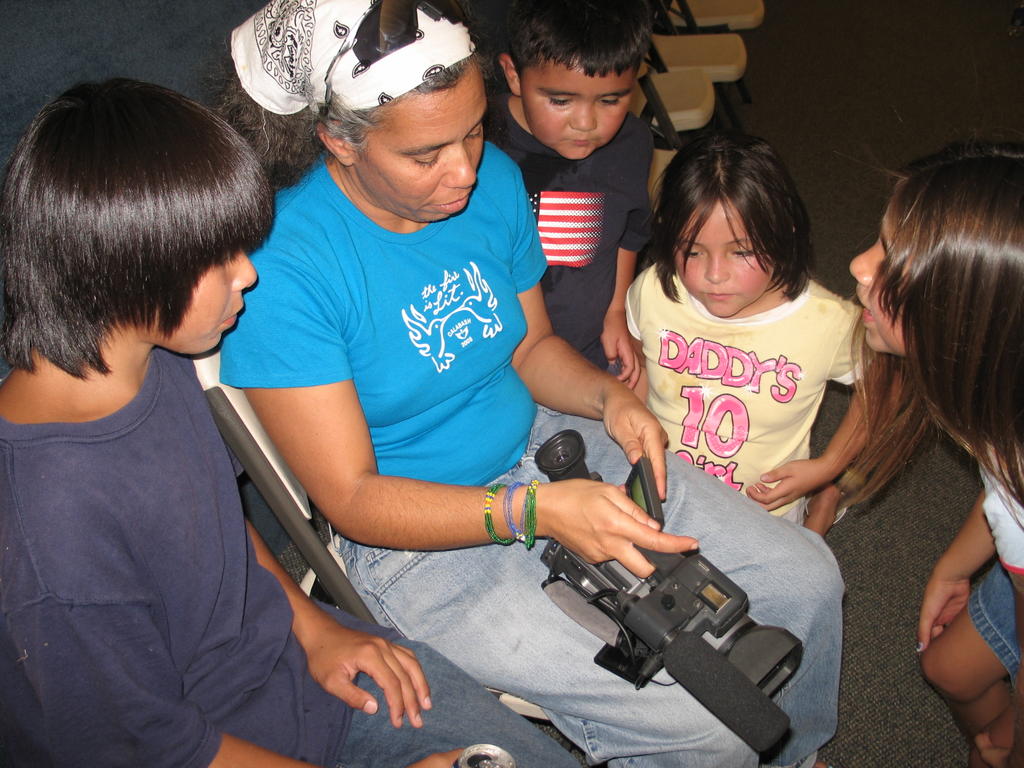
Figgy teaching media at the Kaibab reservation in Arizona. Photo Courtesy Melissa Nelson.

Esther "Figgy" Figueroa and I met at CSA (Caribbean Studies Association Conference) 2005. She is a Jamaican linguist and filmmaker living in Hawai'i. At CSA, she talked about parallels between the Caribbean and Oceania as part of a series of seminars entitled "Islands of Globalization," a project that brings academics and professionals from both regions together to create more awareness by each region of the other. In 1985, Figgy along with Heather Haunani Giugni started Juniroa Productions, Inc., one of the first independent production companies to produce Hawaiian and local content for Hawaiian communities and Hawai'i TV.

Here is a cut and paste of the first installment of an instant message chat with Figgy. We talked about feminism in both regions, how Jamaica has come to embody the Caribbean in the eyes of many in the world, Figgy's own personal beef with Puerto Rico where she lived as a teen, Caribbean studies etc.

Alice says:
So how and why did you, a Jamaican among many other things, decide to move to Hawai'i where you have lived for 20 years now?

Esther says:
well i came to hawai'i with my then lover - we had met in dc and we moved to hawai'i together

Alice says:
I heard you talk at CSA 2005 about this concept of "islandness" which seems to link the Caribbean to the Pacific. Can you talk to us a little bit more about that? I'm assuming it was one of the concepts that informed
"Islands of Globalization".

Esther says:
yes islandness - in the islands of globalization project, we started out trying to explore the concept of islandness - looking at such work as antonio benitez-rojo's "repeating islands" - it's a concept that can only go so far - i mean islands come in many sizes and forms - but there is something about being on an island especially a small island rather than a continent or large land mass - there is the question though of how one got to the island and that's part of the differentiation between island histories - some of the things we consider about islandness is of course the relationship to the ocean - also the question of how people things and ideas circulate in the world

Alice says:
Who's Benitez-Rojo?

Esther says:
the cuban writer antonio benitez-rojo who unfortunately died this year. he wrote about the caribbean archipelago as "repeating islands" repeating islandness such as a rythm of life but also having repeated historical structures such as plantation economies etc. - this is one way we can see the caribbean and pacific linked

Alice says:
How and why did you become involved with Islands of Globalization?

Esther says:
i became a member of the project when my friend
katerina teaiwa brought me in - when the project was just getting off the ground she introduced me to jerry finin the principal in the project and i became part of the team - it was a natural given that i am from the caribbean live in the pacific and go back and forth between the two. the project was a life saver for me in many ways because it was both intellectually stimulating and was emotionally satisfying bringing together the different parts of myself

Alice says:
How do Hawaiians and Pacific Islanders perceive the Caribbean?

Esther says:
the pacific is a huge place and so it differs depending on historical relationships and exposure - for example the british commonwealth pacific and the british commonwealth caribbean have a lot in common because of british colonisation - so fiji and jamaica for example are similar physically - fiji and trinidad have some similar issues over race having to do with imported south asian labour - that sort of thing - the deeper the contact the likelier some sort of understanding - but barring that we all rely on mass media myths about each other -
we share tropical paradise myths about each other - the strongest connection though is music - reggae music is huge in the pacific and so the caribbean to the pacific is really more jamaica (or in some cases bob marley!) and reggae music - and sort of the tropes that go along with that - political resistance, ganja, anti colonialism, rasta religiosity - those sorts of things

Alice says:
Doesn't the Caribbean = reggae to most of the world at this point?


Esther says:
well i'm not sure it is the caribbean - unless the caribbean gets conflated with jamaica which i think is really a problem! i've found that most people really don't know about the caribbean at all and that they often mean jamaica - my cousin who is the jamaican ambassador to japan and serves the whole asian region has told me that the caribbean is simply not on the map - we are subsumed under latin america - well within the caribbean i think because of reggae music and other things the caribbean to a great part of the world is unfortunately subsumed under jamaica - this of course is not the case with the spanish speaking caribbean cuba - the dr - puerto rico - but they are often not even considered caribbean and get subsumed under latin america. and then of course there is the francophone caribbean and that's a whole other thing all together!

Alice says:
How so?

Esther says:
well i think there you have two extremes - you have haiti - "first in freedom!" and then you have the french colonies - how the music, literature, etc. of guadeloupe and martinique circulates in the world is very dependent on french colonial structures in a way that isn't the case with say reggae - then haiti has in some ways a unique situation (of course in other ways not at all unique)

Alice says:
So you were trained as an academic (linguistics and Chinese I believe) but chose instead to be a filmmaker. Why?

Esther says:
well i think of myself as all those things and more - i was born and raised at UWI mona where my dad was professor of education - and the intellectual life and scholarship and all that is just second nature - so i enjoy research and teaching and the fellowship of the academic life but i observed things about the exploitative feudalistic and elite nature of the academic life filled with pettiness and absurdities that i didn't want to be part of so i have three academic degrees including a phd and i'm happy for that - i hang out in universities and enjoy them - but my freedom matters way more to me. i fell into media making and stayed there because of the freedom it gives me - the creativity - as well as the ability to help people have a voice to counter the hegemony of mass media and miseducation and to possibly influence social justice


Figgy at a media training for children at the Kaibab reservation in AZ. Photo Courtesy Nicola Wagenberg.

Alice says:
So the
film company you created, Juniroa Productions, produced some groundbreaking work. How do you feel about that?

Esther says:
it's mixed - on the one hand it's very satisfying to know that i helped to create a record of a time and place and have an infrastructure through which people could communicate and be heard - barry barclay the maori film maker talks about the difference in the way value accrues to the type of work we do versus say a block buster - the work that perpetuates indigenous knowledges -local knowledges- that recreates memories that allows for continuities and cultural revitalization accrues over generations as opposed to a block buster commercial movie which is judged in terms of the first weekend of sales - the fact that value accrues over time means that one often feels a sense of not just marginalization but futility as to whether what one does makes any difference at all but then there are moments when you look back at your work and realize yes it did matter - at the same time you struggle with the basics of the material like how to pay the bills and as you get older it gets harder and harder to face the uncertainties of the independent film making life

Alice says:
So you are a pretty adventurous woman who's lived in both the Caribbean (Jamaica and Puerto Rico) and Oceania. Any observations about the ways in which each of these regions deals with feminism and women?

Esther says:
yikes - i haven't been back to puerto rico in 30 years - i tried to get there this year but flights within the caribbean are becoming more and more impossible - you can no longer go directly from jamaica to puerto rico - anyway - i have never been in a more sexist and woman hating place as puerto rico - sure hope it's improved in 30 years - jamaica is way more complicated - women in jamaica are very strong and powerful at the same time all the "formal" sector institutions are run by men - and there is all this nonsense about the endangered male that leads to even more special allowances and priveleges for males in jamaica - in the pacific it differs wildly from place to place. hawai'i is the safest place i've ever lived as a woman - i go anywhere any time alone and have never had a bad experience ever - this doesn't mean that hawai'i is not sexist - it is extremely so - so as far as i can tell patriarchy is alive and well everywhere and takes different forms and has different accomodations and realities for women

Alice says:
What does your crystal ball have to say about the field of caribbean studies?

Esther says:
would be great if the caribbean actually took caribbean studies seriously so that the caribbean was the repository and depository (instead of the universities of north amerika and europe) of all that the caribbean has given to the world - would be great if we were producing the curricula and materials out of the caribbean and that the caribbean benefited and would be great if caribbean studies was also outward looking and considered horizontal connections with regions like the pacific instead of always being in reaction to the colonial metropoli and the supposed centers of power.

Please leave any questions you have for Figgy in the comments section.

(Part 2 to follow)

------------------------------------------------

8/13/05

Chauvet's Amour: Dark Claire in small town hell . . .


New Yorker Marie Vieux Chauvet's "Amour, Colere et Folie" trilogy was finally re-published this year after decades of muzzled oblivion. The first story "Amour" is a delight and an ethnographic jewel. This is a woman-centered haitian novel written by a most adventurous writer, a controversial pioneer whose vivacious and uncensored prose angered many. Chauvet passed away in New York in 1973, as critically acclaimed Edwidge Danticat turned 4, and almost 20 years before the launch of the Women Writers of Haitian Descent (WWOHD) collective.

"Amour" is a must-read for caribbeanists who want to get a handle on post-occupation Haiti (read post-1934). It is also a good read for those French readers --nope, no English translation yet-- who like a good well-told story. The protagonist Claire narrates the prelude to the Papa Doc years as lived by a peculiarly Jeremie reminiscing southern town and its "white mulatto" bourgeoisie; that strata's women and their strategies in coping or not with sexual repression; its unease with dark-skinned upward mobility and its own downward mobility; its ambiguous relations with desirable and not-so-desirable Others including Americans, Frenchmen, Syrians and peasants; the heightened violence of the pre-Papa Doc years and so on.

To her proxy-white family's distress, and despite her name's connotations, Claire has the mahogany skin of her paternal great-grandmother. Her sisters Felicia and Annette are respectively a pale blond and a barely-sun-kissed blue-eyed brunette. Claire's skin tone, a bad card dealt by the genetic lottery, contradicts generations of selective mating on the part of her ancestors. Still, Claire is the oldest and probably the smartest of her sisters, and her milky-skinned Dad has groomed her to succeed him in managing the family's coffee fields and its workers.

Unlike her sisters, Claire is the sacrificial virgin who never marries, the archetypal old maid stuck in a paralyzing bind. She's respected as a seasoned oldest, enjoys a certain authority and finds herself echoing and even enforcing the clan's imagined endogamous traditions despite her own dark skin. Simultaneously, she has a hard time dealing with her sexual and creative repression and finds many of her peers' prejudices revolting. She lives out her repressed longings for escape and adventure through an obsession with Jean Luze, Felicia's French husband, a handsome world war veteran who collects music and books. Her voyeurism is her only sexual outlet and she experiences her sexuality vicariously through her sisters, particularly through Annette whom she pushes into Jean Luze's arms.


I'm still working through the book's many layers so expect many more posts on various aspects of it in days to come. Unfortunately, the book has not yet been put into english but if yours truly can help it, we'll be lobbying for that shortly. (Wink-wink.) I'm well aware that Lilas Desquiron's Reflections of Loko Miwa also deals with pre-1964 massacre Jeremie but haven't read it yet so we'll have to draw parallels later. Should be fun!